
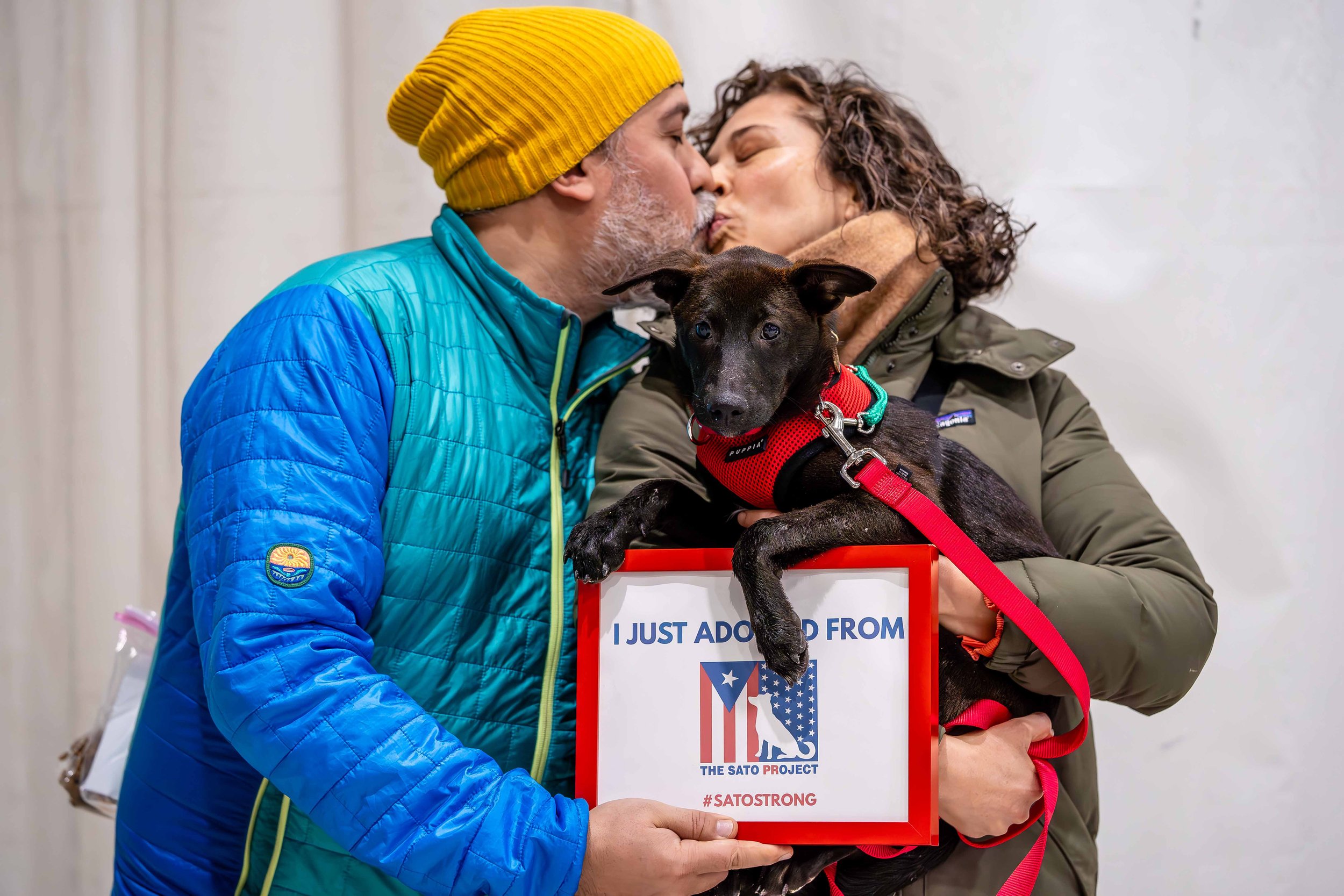
New PROGRAM
THE SATO PROJECT
SATO UNITED

Introducing SATO United©
(Satos Across The Ocean)
Our new expanded Freedom Flight program.
Every rescue dog deserves a first-class journey to their forever home.
In response to increasing limitations on commercial and cargo transport, The Sato Project is taking flight in a bigger way. We’ve launched a strategic expansion of our Freedom Flight program to overcome the hurdles that stand between a rescue dog and their new family.
By uniting a coalition of expert veterinarians, dedicated flight partners, and generous donors, we are ensuring that no rescue dog is left behind due to flight restrictions.
Flying satos requires more than just a plane – it requires a commitment to achieving the highest standards of excellence in the transportation of animals.
SATO United © will prioritize and provide a responsible, safe, and secure approach to flying these incredible dogs to their new lives.
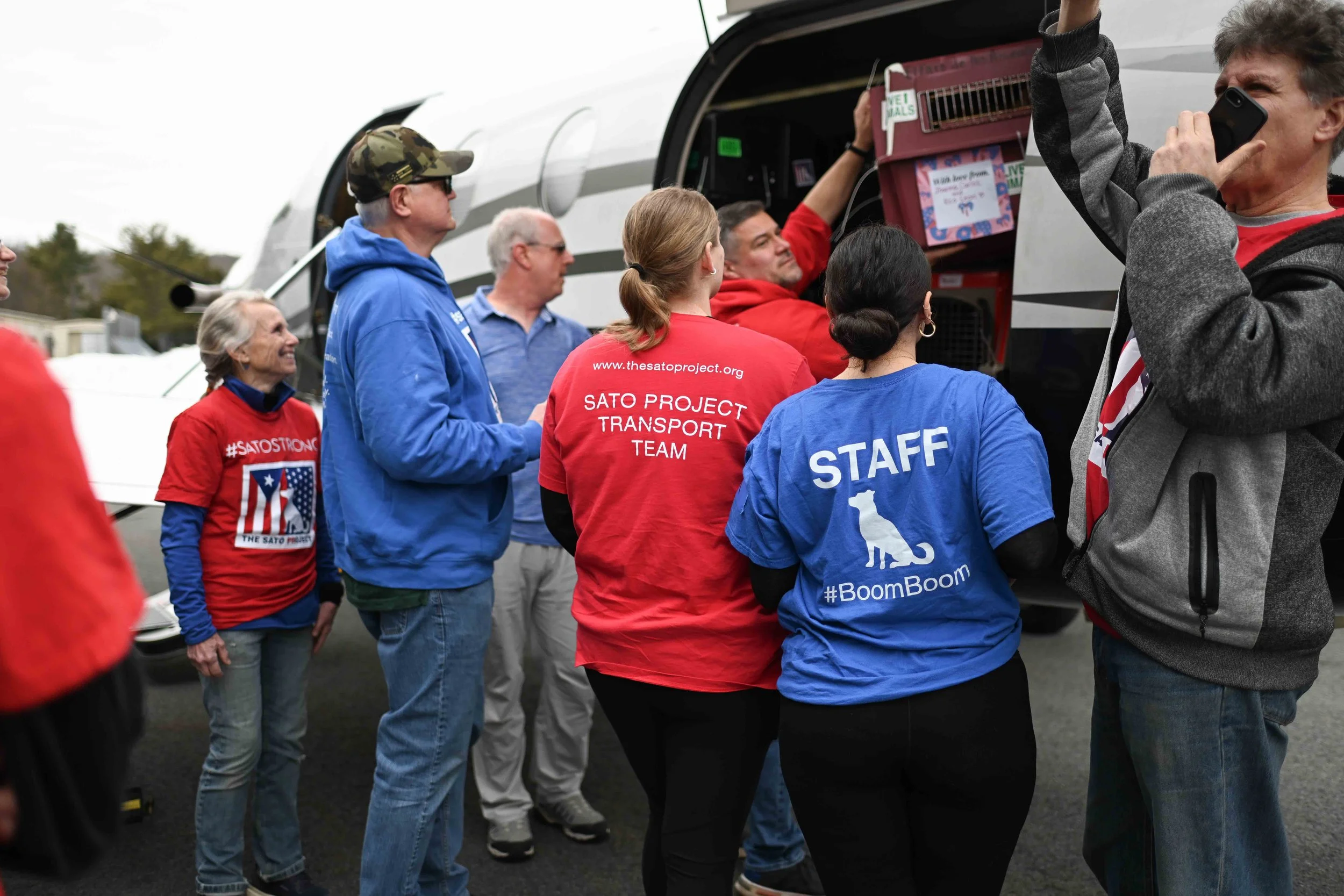
How SATO United © works:
Investing in Health, Not Cargo. By providing monthly zero-cost flights, we are empowering rescuers to redirect funds exactly where they belong: into high-quality licensed veterinary care, life-saving treatments, and proper rehabilitation.
To ensure the safety of every passenger, we operate on three simple pillars:
Affordable Vetting: Visit one of our Coalition Veterinarians to complete the required health protocols at our exclusive discounted Sato United rescue rate.
Safe Transition: A required quarantine period to ensure every dog is travel-ready.
Guaranteed Landing: Confirmed placement must be secured prior to departure.
FLIGHT FAQ’S
-
These planes are privately chartered and are not free for The Sato Project to use. However, there is ZERO charge to any rescuer, organization, or individual to fly their dogs with SATO United. We absorb all costs of flight travel.
-
The Sato Project/SATO United is not a direct air carrier and does not own or operate any aircraft. All flights are operated by a licensed U.S. air carrier.
-
We are happy to fly cats; however, space for cats will only be available on certain flights.
-
Yes. We have mandatory quarantine and vetting protocols that must be completed for your dog/cat to be eligible for our flights. Complete vetting protocols for cats and dogs can be found below. We will provide you with a coalition of licensed veterinarians that will complete the required protocols noted below for a reduced fee, which is substantially lower than the cost of a commercial cargo flight.
-
No, the animals are not flown in cargo hold. All aircraft used are passenger planes or planes specifically outfitted for the purpose of safely transporting animals. All animals are monitored throughout by the flight crew.
-
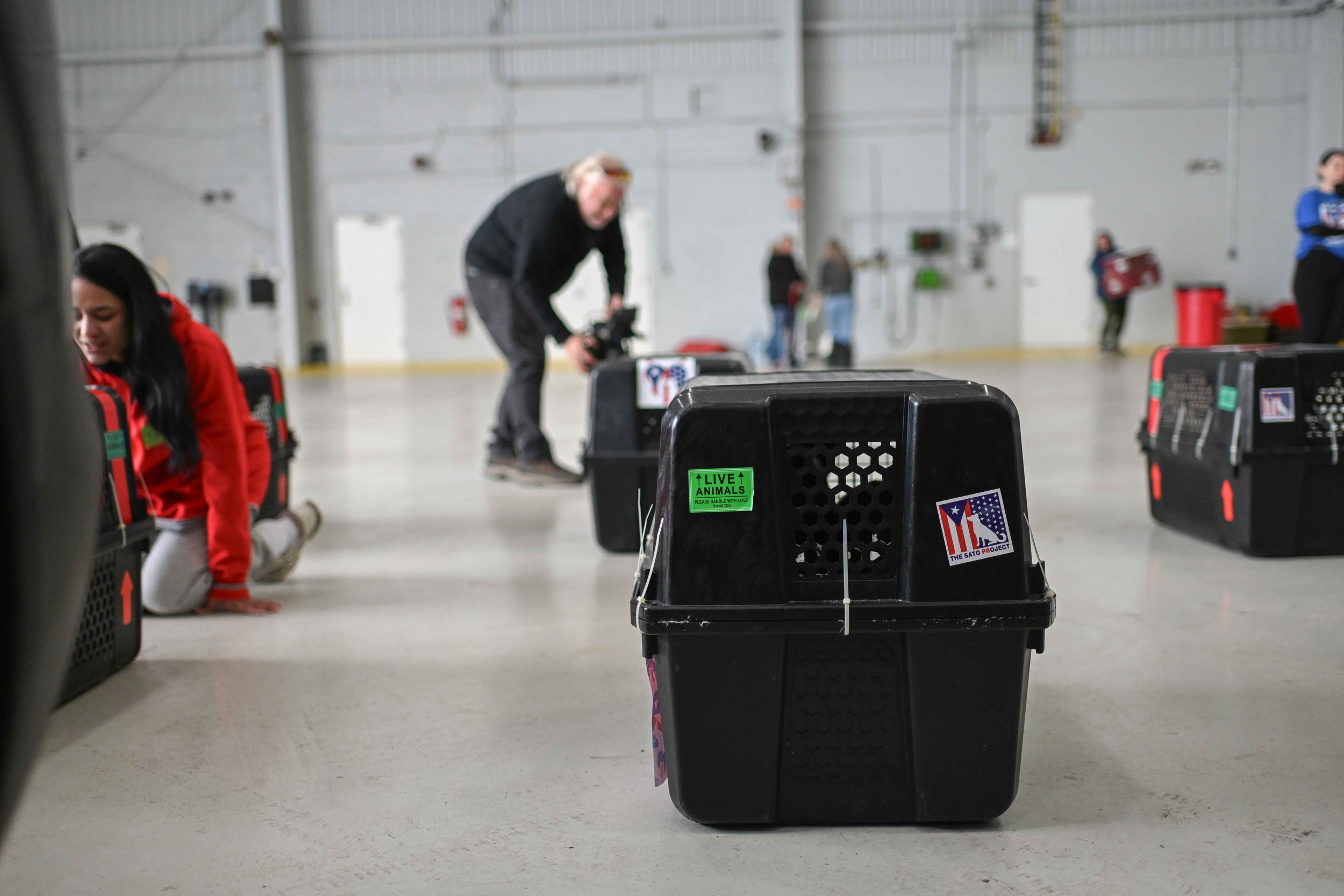
Yes, All dogs/cats must be flown in an appropriately sized PLASTIC travel crate vented on three sides. Crate sizes will be advised by our team. Wire crates will not be accepted. If you show up at the airport with the wrong size crate your dog/cat will not travel.
-
Dogs/cats must be dropped at the departure airport in Puerto Rico, and you must stay until the flight is in the air. All flights land at Morristown Municipal Airport (MMU) in Morristown, New Jersey (with some flights requiring a refueling stop in Florida). You must have a ride arranged to pick the animal up (whether that be the adopter, foster, or shelter partner.) Please have a backup person ready in case of emergency. We do not have a facility or the resources to keep your dog/cat upon arrival.
-
All animals flown must have placement* on the mainland United States in order to be eligible for transport. “Placement” is here defined as an adopter, foster, or shelter partner willing to accept the animal and pick them up.
A signed Memorandum Of Understanding (MOU) will be required to fly your animal.
Proof of completion of our simple quarantine and vetting protocol is mandatory to be eligible for these flights (full protocols noted below).
We maintain the right to refuse to transport any animal that is exhibiting aggressive behavior or does not appear fit to travel.
*The Sato Project/SATO United cannot facilitate placement for any dogs/cats outside of our own rescue program.
-
Following the recommendations of the American Veterinary Medical Association (AVMA), The Sato Project/SATO United will not accept dogs and cats that have been sedated or tranquilized. Pets that have been given sedatives or tranquilizers are at a higher risk of respiratory and cardiovascular problems at high altitudes. The Sato Project/SATO United will not knowingly accept a dog or cat that has been or appears to have been sedated.
Vetting Protocol DOGS
• Dog must have been living in possession of the rescue organization or in foster for a minimum of 35 days prior to travel. Proof of rescue date must be provided.
• Dogs over the age of 12 weeks must be spayed or neutered (unless in the case of a medical exception, in which case we require a letter from a licensed veterinarian detailing the reason. Proof of sterilization must be provided.
• Proof of CBC and blood chemistry work performed within 35 days of travel must be provided.
• Proof of microchip insertion (before the rabies vaccine) - must be provided.
• Proof of Rabies Vaccine* (administered 31 days prior to transport) must be provided
• Proof of Two x Combination vaccine (DHLPP or DAPP+L4) administered must be provided.
• Proof of One x Bordetella vaccine administered must be provided.
• Proof of negative 4DX Snap test for dogs over five (5) months of age administered within 35 days of travel must be provided.
• Proof the dog is up to date on flea/tick/heartworm preventatives must be provided. (Note: Ivermectin is NOT a preventative.)
• Proof of negative fecal test performed within seven (7) days of travel must be provided.
• Travel certificate issued by a licensed veterinarian within seven (7) days of travel must be provided.
*CDC and USDA regulations now require a rabies vaccine to be administered a MINIMUM of 30 days prior to an animal being transported. This is a FEDERAL requirement and we cannot circumnavigate it.
Vetting Protocol CATS
• Cat needs to have been with rescue or in foster for a minimum of 35 days (Rescue date and proof must be shown)
• Spayed or Neutered (unless a medical reason why not in which case we require a letter from a licensed veterinarian detailing OR KITTEN UNDER 12 WEEKS OF AGE)
• Negative FIV/FeLV test
• Ringworm free
• Up to date in monthly Preventatives (Ivermectin is NOT a preventative)
• Rabies Vaccine* (administered 31 days prior to transport)
• Two (2) Combination vaccine (FVRCP-Felv)
• Negative Fecal within 7 days of travel
• Travel certificate issued by a licensed veterinarian within seven (7) days of travel.
*CDC and USDA regulations now require a rabies vaccine to be administered a MINIMUM of 30 days prior to an animal being transported. This is a FEDERAL requirement and we cannot circumnavigate it.
Disclaimer on Vetting and Quarantine Regulations
We will comply with all regulatory laws with no exception. Do not request special accommodation or flexibility on the quarantine/veterinary protocols; it will not be granted, and you will not be permitted continued use of our program.
